Featured image Flossing, using interdental brushes and picks
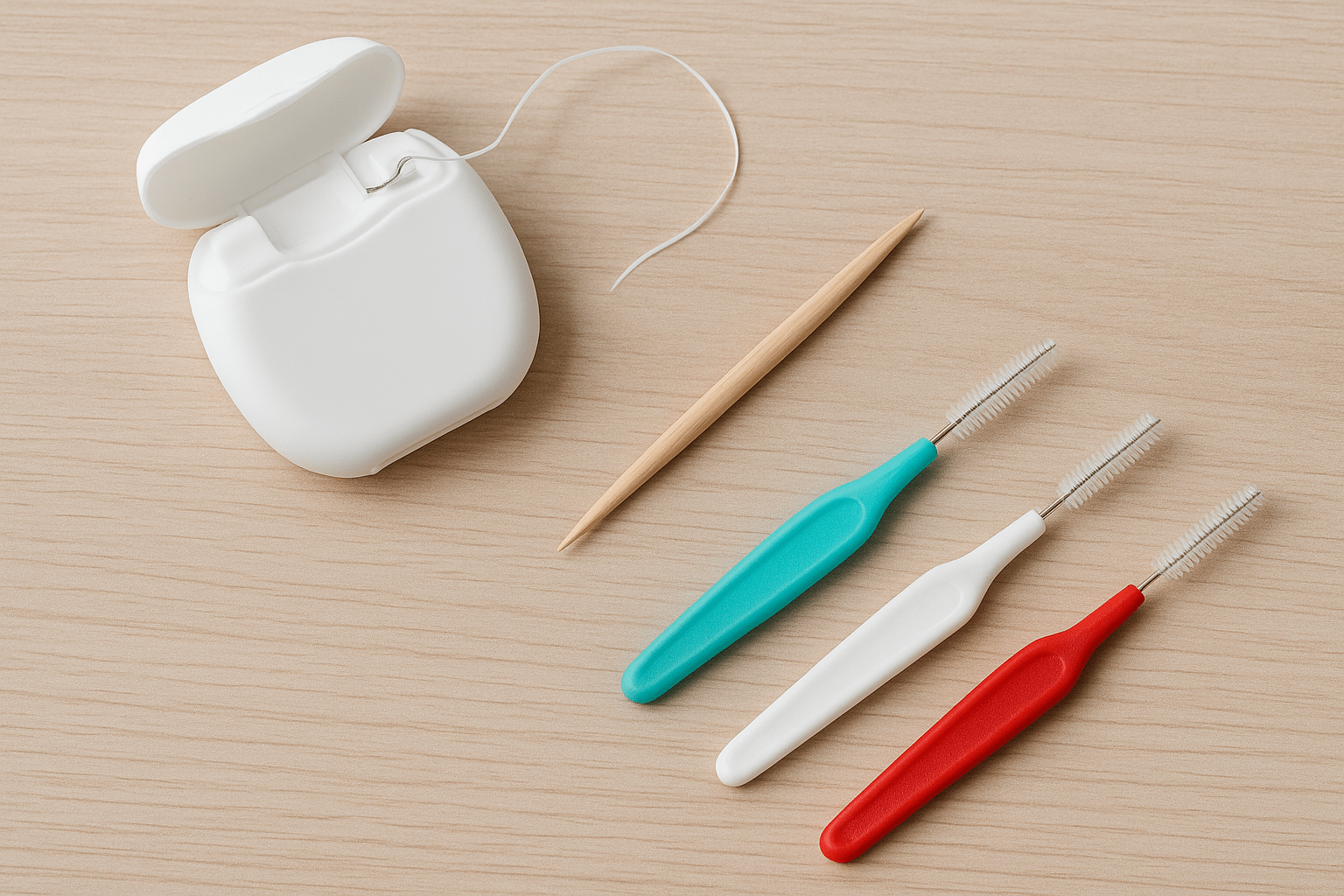
Gum disease often begins between the gum line and the teeth. Bacteria accumulate because these are hard-to-reach places with a toothbrush. Therefore, it is important to clean thoroughly between the teeth and molars and to make this part of your daily oral care routine. Interdental cleaning tools remove plaque and leftover food particles. But what is the actual difference between flossing, using interdental brushes, and toothpicks?
Flossing
You can floss your teeth using both dental floss and special flossers made of plastic and a piece of floss, known as 'floss forks'. To ensure you achieve the best possible results, you must floss correctly. We would be happy to explain exactly how this technique works.
Flossing technique
To begin flossing, wrap about 45 centimeters of dental floss around the middle or index fingers of both hands. This may seem like a lot, but it is important to have enough clean floss to floss between all your teeth. Next, use one of your other fingers to move the floss between your teeth. Move the floss in a zigzag motion between your teeth and prevent it from breaking. Pull the floss up and down (a scooping motion) along the surface of your teeth, and do not forget to include the gums and the back of your teeth. The technique is exactly the same with plastic flossers and dental floss.
Heating
Another way to remove plaque and food debris is by using toothpicks. It is important that you use triangular wooden toothpicks, which allow you to easily remove remaining food debris and plaque.
Toothpick instructions
To clean your teeth, insert the tip of the toothpick between your teeth. The flat side of the toothpick should be positioned towards the gums. Use this to push the gums down slightly, then push the toothpick between the teeth until it can go no further. Next, move the toothpick vigorously between the teeth a few times.
Ragen
Interdental brushes are small, round brushes. You can buy them in various sizes, thicknesses, and lengths. Interdental brushes are often recommended for people with braces or severe gum problems. With braces, food particles often get stuck behind the brackets. With an interdental brush, you can easily reach behind the braces. If you do not have braces, you can use the brushes in areas where there is a bit more space between the teeth.
Raking techniques
When using an interdental brush, gently push it between two teeth or molars. Move the brush back and forth, as well as left and right, so that the bristles move between the teeth and molars. When you are finished, clean the brush thoroughly. You can use the brush multiple times. Replace the brush when it becomes bent or loses bristles.
Questions about good oral hygiene
Are you unsure exactly which of the above options is suitable for your teeth? Then please contact us. with our dentists or dental hygienists. They can provide you with appropriate advice based on your teeth. You can also make an appointment for a periodic check-up. If you are a patient, please make an appointment. This can easily be done by clicking the button below. If you are not a patient at TCN, you must first register with our practice. You can do this by clicking the 'Become a patient' button below.